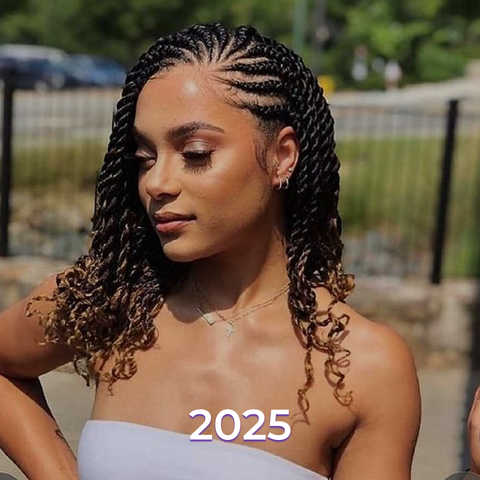
Two strand twists for breakage-prone hair: retain length & strength
By The Beauty Bar Salon and Spa | August 27, 2026
Allentown / Elmwood Village, Buffalo, NY | +17162481203 | jbws829@gmail.com
“Very professional and clean” is something I hear a lot, and it matters because breakage-prone hair needs careful hands, not rushing or pulling. Yes, single twists, also called two strand twists, can help reduce breakage by limiting daily manipulation and protecting your ends. They’re usually a great fit for medium to coarse natural textures and anyone who can keep up with gentle at-home care. If your hair is very fine, heavily over-processed, or your edges feel fragile, I’ll talk you through safer options before I ever twist you up.
Breakage in Buffalo is not just “dry hair”, it’s friction + handling
If your hair “won’t grow, ” most of the time it’s growing, you’re just losing length at the ends. Breakage tends to show up as frayed tips, short pieces around your crown, or edges that look thinner after a season of ponytails, hats, and quick styling.
Buffalo weather plays a role too. Cold, hat-heavy winters can rub at your hairline and dry out your scalp. Then summer humidity hits, frizz goes up, and a lot of people start re-doing styles too often because they feel “messy.” That extra take-down, re-brush, re-gel cycle is where hair starts snapping.
My rule of thumb: if your schedule is tight and your hair breaks when you “fix it, ” you need a style that lets you leave it alone without looking like you left it alone.
Why single twists help you retain length (when the install is gentle)
Single twists work because they reduce day-to-day handling. Your ends stay tucked. Your hair isn’t being brushed, re-parted, and pulled into tension every morning. And when the parts and tension are right, twists sit comfortably without stressing your edges.
The technique details that protect breakage-prone hair
In my chair, I pay attention to the “small stuff” that keeps hair on your head. Clean, consistent parting helps the style wear evenly. Twist size matters too. Too small can mean too much weight and tension. Too large can unravel fast and lead to re-doing pieces all the time.
I’m also big on comfort. A review that stuck with me described braids as “nice neat comfortably tight and extra soft.” That balance is exactly what I’m going for with two strand twists, especially around your hairline.
“My braid came out nice neat comfortably tight and extra soft!”
one of our regulars
Maintenance that actually keeps twists looking good
Twists don’t “do the work” alone. Your part is keeping the routine gentle. I’ll give you simple upkeep guidance so you’re not guessing. In general, that means light moisturizing, a little scalp oiling when you need it, and sleeping in satin so your hairline isn’t rubbing all night. In Buffalo winters, most people need to be more consistent with moisture because indoor heat dries everything out. In humid summers, you’ll usually do better with lighter product so you don’t get buildup and itch.
Real-life expectation: if you want length retention, the goal is fewer “do-overs.” Twists are protective when you leave them alone, keep your scalp comfortable, and take them down patiently.
Single twists vs. box braids, cornrows, wigs, and a flat twist option
If breakage is your main concern, it helps to pick a protective style for the reason you’re wearing it, not just the look.
Two strand twists (single twists): great when you need low manipulation and you want a softer, more natural look and feel.
Watch-outs: if they’re installed too tight or too tiny, edges can take a hit. I keep tension controlled and size appropriate.
Box braids: a solid option when you want longer wear. I’ve had clients tell me their braids “last a long time, ” and longevity can mean less re-styling.
Watch-outs: weight and tension add up if the hairline is already fragile.
Cornrows and a flat twist: if you want your hair secure under hats, scarves, or a wig, a flat twist pattern or cornrows can be a better match for winter routines.
I’m big on copying what you ask for. One client loved that their style was modeled “exactly after the picture” they showed.
Wigs: can be low-manipulation, but only if the foundation is comfortable and you’re not constantly adjusting combs or clips.
Watch-outs: friction at the hairline is real, especially with Buffalo winter hats layered on top.
If you’re thinking about summer longevity specifically, I also wrote about summer braid styling in Buffalo so you can pick a style that holds up without constant re-doing.
Is this the right protective style for you? A quick, honest checklist
Single twists are usually a great match if you have natural hair that does well with a protective style and you want something you can live in without daily styling. I also love them for people who need a neat look for work or school but don’t want that “pulled” feeling.
I slow down and talk through options if your edges are already struggling, your hair is very fine, or it’s recently been through heavy chemical processing. In those cases, a different size, a different style, or a break from added tension can be the smarter move.
What it’s like to book single twists in Allentown / Elmwood Village (and what it costs)
I’ve been doing hair in Buffalo for 10 years, and I know people want two things at the same time: beautiful results and a process that doesn’t waste your day. I keep communication clear, including price. A client put it perfectly when they said the style was done “in record time and at the price clearly stated when we spoke.” That’s the standard I stick to.
Single twists
120 minutes | Starting at $65
A classic twist style designed to keep your hair protected and easy to manage. I focus on clean parting and controlled tension so your twists look neat and feel comfortable.
Local note: I’m right here near Allentown / Elmwood Village. A lot of people pair their appointment with Elmwood Village stops, then head out feeling put together.
And if you’re coming in from Kenmore, Tonawanda, Cheektowaga, Amherst, or Lackawanna, I’ll make sure you leave with a simple upkeep plan so you’re not driving back sooner than you need to.